
Arthur B. Carles
Artist Biography
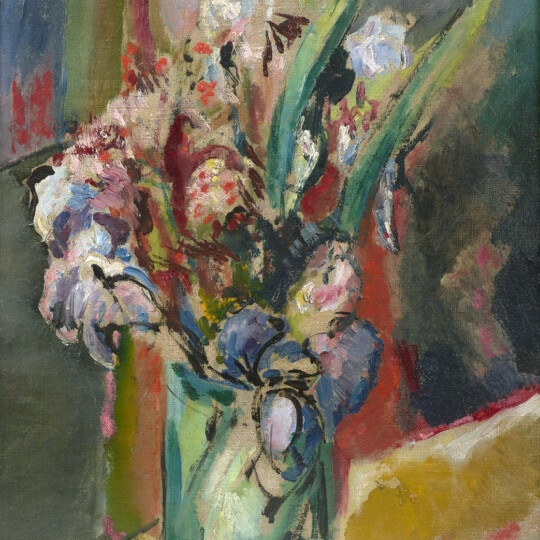
Arthur B. Carles was a celebrated American modernist whose vivid colors and bold forms were influenced by French Impressionism and paved the way for the abstract expressionist movement in the United States. He was a member of Alfred Stieglitz’s circle and was also instrumental in bringing and establishing an interest in modern art to Philadelphia during the 1930s.
By Chelsea DeLay
I. Biography
II. Chronology
III. Collections
IV. Exhibitions
V. Memberships
VI. Notes
VII. Suggested Resources
I. Biography
Arthur Beecher Carles Jr. was born in Pennsylvania in 1882 and grew up in Philadelphia, where he graduated from high school in 1900. That winter, Carles enrolled as a student at the Pennsylvania Academy of the Fine Arts (PAFA) on a scholarship and studied with William Merritt Chase, Thomas Anshutz, and Celia Beaux. During the seven years that Carles studied at PAFA, his approach was heavily influenced by the teachings of Chase, who introduced the young artist to the painterly technique favored by Diego Velázquez, Édouard Manet, James Abbott McNeill Whistler, and John Singer Sargent.[1] Carles’s early pieces impressed his teachers with his bold use of color and texture and earned the budding artist several student awards: he received the Henry P. Thouron prize in 1903, the sought-after William Emlen Cresson Short-Term Traveling Scholarship in 1905 and 1907 (which funded trips to France, Spain, and England), and also won first prize in the Charles Toppan competition at the end of his last semester as a student. In 1907, when the last payment from his traveling scholarship threatened to end his stay in Europe, Carles was able to extend his time abroad by accepting a commission from Philadelphia’s St. Paul’s Episcopal Church to make a copy of Raphael’s Transfiguration, which was located in Vatican City.[2]
Carles delayed heading to Rome to work on the Transfiguration commission and chose instead to remain in Paris; he frequented the apartment of Gertrude and Leo Stein, where he was moved by the expressive approach seen in works by the Paul Cézanne, Henri Matisse, and Pablo Picasso. Other American artists in France at the time included John Marin, Edward Steichen, and Alfred H. Maurer, all of whom Carles met and became acquainted with. He became closest with Steichen who introduced him to the small town of Voulangis in 1908, where Carles spent the summer experimenting with vivid colors and dramatic forms as he painted picturesque scenes of the surrounding French landscape.[3] Carles finally arrived in Rome the following year and his completed, full-sized copy of Raphael’s Transfiguration was unveiled at Saint Paul’s Episcopal Church in 1911, shortly after making his stateside return earlier that month in December.
He remained friends with the American modernists he first met while in Paris and was introduced to Alfred Stieglitz in 1912 by Steichen; Carles subsequently became a member of the Stieglitz circle, and was offered a one-man exhibition at the “291” gallery the same year.[4] For Carles, this was the first of many solo exhibitions throughout his entire career, which included shows at Montross Gallery, The Art Institute of Chicago, Philadelphia’s Cosmopolitan Club, Gimbel Galleries, and Philadelphia Museum of Art. He accepted a teaching position at the PAFA in 1917, and the following year he applied his artistic abilities toward the war effort when he was hired by the Philadelphia Navy Yard to direct the camouflage painting of ships.[5]
During the 1920s, Philadelphia experienced a cultural renaissance in which Carles played an important role; he was instrumental in bringing three landmark exhibitions of modern art to the Pennsylvania Academy of the Fine Arts in 1920, 1921, and 1923 respectively.[6] The success of these three shows imbued Carles with a creative high that sparked a renewed interest in abstraction; he returned to Voulangis in the summer of 1921, where he again found inspiration in the French countryside and gardens. Montross Gallery held an exhibition of his work produced on this trip, and audiences commended his vibrant colors and expressive range of technique.
Carles’s life took an unexpected turn in 1925: he was let go from the Pennsylvania Academy of the Fine Arts after receiving numerous reprimands from the faculty for missing classes and also filed for divorce from his wife Mercedes, with whom he had only lived with for short periods since their 1909 wedding.[7] Carles refocused his artistic attention from female nudes to dazzling floral–still lifes for the next two years, but spiraled into a deep depression after his mother’s death in 1927. In the 1930s, he channeled his feelings of loneliness and depression into his later works—darker, abstracted pieces that reflected his growing interest in the cubist approach. Always a modernist, the work Carles produced in the last active years of his career earned him the reputation as one of our country’s leading abstract expressionists. Sadly, he was hospitalized more and more frequently as the 1930s progressed for reasons associated with alcoholism; in 1941, a fall tragically left him partially paralyzed and unable to paint. Carles was confined to a wheelchair for remainder of his life and passed away in 1952 at the Fairview Nursing Home in Chestnut Hill, Pennsylvania.
After his death, his work continued to be highlighted in the United States and internationally in important shows and solo exhibitions, including those at the Corcoran Gallery of Art, Hirshhorn Museum and Sculpture Garden, The Museum of Modern Art, Musée d’Art Moderne de la Ville de Paris, Museum of Art, Rhode Island School of Design, The Museum of Fine Arts, Houston, Palais des Beaux Arts, Parrish Art Museum, The Royal Scottish Academy, and Whitney Museum of American Art.
II. Chronology
1882 Born in Philadelphia, Pennsylvania
1900–1907 Studies at the Pennsylvania Academy of the Fine Arts
1904 First time exhibiting work, at the Philadelphia Watercolor Exhibition at the Pennsylvania Academy of the Fine Arts
1905 Awarded the William Emlen Cresson Short-Term Traveling Scholarship by the Pennsylvania Academy of the Fine Arts; travels to England, France, and Spain with classmate George Oberteuffer
1907 Awarded the William Emlen Cresson Short-Term Traveling Scholarship by the Pennsylvania Academy of the Fine Arts; in June receives commission from St. Paul’s Episcopal Church paint a copy of Raphael’s Transfiguration in the Vatican Gallery in Rome; travels from New York to Paris, visits apartment of Leo and Gertrude Stein, meets John Marin
1908 While in France, founds New Society of American Artists in Paris with Patrick Henry Bruce, Marin, Alfred H. Maurer, Edward Steichen, and Max Weber; moves to French village of Voulangis; proposes to Mercedes de Cordoba
1909 Spends the spring in Rome working on the Transfiguration commission from the Episcopal Church; marries Mercedes de Cordova in Paris on July 22
1910 Returns to Philadelphia in December
1911 Unveils finished copy of Transfiguration at Saint Paul’s Episcopal Church
1912 First one-man show at Stieglitz’s “291” Gallery in New York City; leaves Paris to return to the United States
1913 Returned to Philadelphia, exhibits at the International Exhibition of Modern Art, famously known as the Armory Show; daughter Mercedes is born on December 6
1914 Invited to be juror for the Pennsylvania Academy of the Fine Arts Fellowship Prize competition
1915 Begins experimenting with etchings and monographs
1917 Accepts teaching position at the Pennsylvania Academy of the Fine Arts as instructor of drawing and painting
1918 Directed paintings of ships’ camouflage at the Philadelphia Navy Yard
1919 Visits Maine
1921 Travels to Paris with his wife and daughter in the summer, they stay at Edward Steichen’s house in the village of Voulangis
1922 Returns to the United States and visits John Marin in Maine during the summer; separates from wife Mercedes; positive response to Voulangis scenes results in second one-man exhibition in December at Montross Gallery in New York
1925 Dismissed from the faculty of the Pennsylvania Academy of the Fine Arts; teaches private classes, divorces from wife
1927 Marries his second wife, Caroline Robinson on April 4 in Philadelphia; death of mother Janet Buchanan Carles in autumn; daughter Caroline born December 6
1928 Teaches summer classes in Atlantic City, New Jersey, begins to experiment with cubist principles
1929 Travels to France in the spring with wife Caroline and daughter, reside in Voulangis through autumn
1930 The Marseillaise purchased for $5,000 by twenty-five subscribers for the new Philadelphia Museum of Art; rents studio in Paris
1931 Returns to Philadelphia in the spring, spends time with Matisse, who was working on the lunettes for the Barnes Foundation; resides on Steamboat Wharf in Nantucket, Massachusetts with wife and daughter
1932 Moves family to studio in Chestnut Hill, Pennsylvania
1933 Becomes close with Hans Hoffman, whose daughter Mercedes was studying with him in New York
1934 Spends summer with Hofmann and Mercedes in Gloucester, Massachusetts
1935 First one-man show in Philadelphia at the Cosmopolitan Club
1936 Major solo exhibition at Marie Harriman Gallery in New York; invited to join American Abstract Artists in New York
1938 Hospitalized several times throughout year
1940 Meets Fernand Léger in Philadelphia and New York; first solo exhibition at Pennsylvania Academy of the Fine Arts
1941 Visited by Marin in November; partially paralyzed after falling down the stairs in his studio and confined to wheelchair, unable to paint
1946 Admitted to Fairview Nursing Home in Chestnut Hill, Pennsylvania
1952 Passes away at Fairview Nursing Home in mid-June
1953 Memorial exhibition co-sponsored by Pennsylvania Academy of the Fine Arts and Philadelphia Museum of Art
III. Collections
Albright-Knox Art Gallery, New York
The Art Institute of Chicago, Illinois
Carnegie Museum of Art, Pittsburgh, Pennsylvania
Delaware Art Museum, Wilmington, Delaware
Everson Museum of Art, New York
Hirshhorn Museum and Sculpture Garden, Smithsonian Institution, Washington, D.C.
The Metropolitan Museum of Art, New York, New York
Newark Museum, New Jersey
New Britain Museum of American Art, Connecticut
Pennsylvania Academy of the Fine Arts, Philadelphia, Pennsylvania
Philadelphia Museum of Art, Pennsylvania
The Phillips Collection, Washington, D.C.
Phoenix Art Museum, Arizona
San Francisco Museum of Modern Art, California
Sheldon Museum of Art, University of Nebraska—Lincoln
Smithsonian American Art Museum, Washington, D.C.
The State Museum of Pennsylvania, Harrisburg, Pennsylvania
Whitney Museum of American Art, New York, New York
Woodmere Art Museum, Philadelphia, Pennsylvania
IV. Exhibitions
1904–09, 1911, 1913, 1915, 1917–21, 1923–24, 1930, 1933, 1936, 1939, 1940–46, 1953, 1955, 1958–60, 1966, 1968, 1972, 1976, 1979 Pennsylvania Academy of the Fine Arts, Philadelphia, Pennsylvania, Henry P. Thouron prize, 1903; Charles Toppan prize, Honorable Mention, 1905; First Toppan prize, 1907; John Lambert Prize, 1915; Lippincott prize, 1917; Stotesbury prize, 1919; Joseph E. Temple gold medal, 1930; J. Henry Scheidt Memorial Prize, 1939; solo exhibitions, 1940, 1966, 1972; memorial exhibition, 1953
1910 “291” Gallery, New York, New York
1912 “291” Gallery, New York, New York, solo exhibition
1913 The International Exhibition of Modern Art, New York, New York
The Art Institute of Chicago, Illinois, Norman Wait Harris Bronze medal
Cincinnati Art Museum, Ohio
1914 National Arts Club, New York, New York
1915 Panama-Pacific International Exposition, San Francisco, California, silver medal
The Saint Louis Art Museum, Missouri
1916 San Francisco Art Association, California
Montross Gallery, New York, New York
Charcoal Club, Baltimore, Maryland
The Art Club of Philadelphia, Pennsylvania
1917 The Art Institute of Chicago, Illinois
1919 Sketch Club, Philadelphia, Pennsylvania
Art Alliance, Philadelphia, Pennsylvania
Albright-Knox Art Gallery, Buffalo, New York
Cincinnati Art Museum, Ohio
Saint Louis Art Museum, Missouri
Musée Nationale de Luxembourg, Paris, France
1921 The Art Institute of Chicago, Illinois
1922 Montross Galleries, New York, New York, solo exhibition
1923 The Art Institute of Chicago, Illinois, solo exhibition
Carnegie Museum of Art, Pittsburgh, Pennsylvania
1924 Carnegie Museum of Art, Pittsburgh, Pennsylvania
Albright-Knox Art Gallery, Buffalo, New York
1925 Carnegie Museum of Art, Pittsburgh, Pennsylvania
1926 Carnegie Museum of Art, Pittsburgh, Pennsylvania
Corcoran Gallery of Art, Washington, D.C.
1927 Grand Central Art Galleries, New York, New York
Wildenstein Galleries, New York, New York
The Art Institute of Chicago, Illinois, Potter Palmer gold medal
1928 Columbus Gallery of Fine Arts, Ohio
The Art Institute of Chicago, Illinois, Logan Medal, Purchase Prize
1929 The Art Institute of Chicago, Illinois
1930 The Museum of Modern Art, New York, New York
1931 Carnegie Museum of Art, Pittsburgh, Pennsylvania
The Art Institute of Chicago, Illinois
1932 Mellon Galleries, Philadelphia, Pennsylvania
Corcoran Gallery of Art, Washington, D.C.
1933 Worcester Art Museum, Massachusetts
The Philadelphia Art Club, Pennsylvania, gold medal
The Art Institute of Chicago, Illinois
Carnegie Museum of Art, Pittsburgh, Pennsylvania
Philadelphia Museum of Art, Pennsylvania
The Museum of Modern Art, New York, New York
1934 Philadelphia Museum of Art, Pennsylvania
The Arts Club of Chicago, Illinois
The Art Institute of Chicago, Illinois
Carnegie Museum of Art, Pittsburgh, Pennsylvania
Whitney Museum of American Art, New York, New York
1935 Corcoran Gallery of Art, Washington, D.C.
Cosmopolitan Club, Philadelphia, Pennsylvania, solo exhibition
Philadelphia Museum of Art, Pennsylvania
The Art Institute of Chicago, Illinois
Gimbel Galleries, Philadelphia, Pennsylvania, solo exhibition
1936 Marie Harriman Gallery, New York New York, solo exhibition
The Art Institute of Chicago, Illinois
The Philadelphia Art Club, Pennsylvania, gold medal
1937 Corcoran Gallery of Art, Washington, D.C
The Philadelphia Art Club, Pennsylvania
1939 World’s Fair, New York, New York
Golden Gate International Exposition, San Francisco, California
Corcoran Gallery of Art, Washington, D.C
The Art Institute of Chicago, Illinois
1941 Corcoran Gallery of Art, Washington, D.C.; Seattle Art Museum, Washington; Santa Barbara Museum of Art, California; San Francisco Museum of Modern Art, California, traveling exhibition
1942 Philadelphia Museum of Modern Art, Pennsylvania
Woodmere Art Gallery, Philadelphia, Pennsylvania, solo exhibition
The Museum of Modern Art, New York, New York
Philadelphia Museum of Art, Pennsylvania
1944 Philadelphia Art Alliance, Pennsylvania, solo exhibition, Philadelphia Art Alliance medal of achievement
Nierendorf Gallery, New York, New York, solo exhibition
Cincinnati Art Museum, Ohio
1945 Corcoran Gallery of Art, Washington, D.C
California Palace of the Legion of Honor, San Francisco, California
1946 Philadelphia Museum of Art, Pennsylvania, solo exhibition
1948 Colorado Springs Fine Arts Center, Colorado
1949 The Museum of Modern Art, New York, New York
National Philatelic Museum, Philadelphia, Pennsylvania
1950 Philadelphia Museum of Art, Pennsylvania
1951 The Museum of Modern Art, New York, New York
1953 The Walker Art Center, Minneapolis, Minnesota
Dubin Gallery, Philadelphia, Pennsylvania, solo exhibition
1954 The Museum of Modern Art, New York, New York
1955 Allen Memorial Art Museum, Oberlin College, Ohio, solo exhibition
The Museum of Modern Art, New York, New York
1957 James Graham & Sons, New York, New York
Ogunquit Museum of American Art, Maine
American Federation of Art, traveling exhibition
1958 Dubin Gallery, Philadelphia, Pennsylvania, solo exhibition
Whitney Museum of American Art, New York, New York
Colorado Springs Fine Arts Center, Colorado
1959 Graham Galleries, New York, New York, retrospective
The Westmoreland Museum of American Art, Greensburg, Pennsylvania
Ogunquit Museum of American Art, Maine
Allentown Art Museum, Pennsylvania
1960 Walter Baum Galleries, Sellersville, Pennsylvania, solo exhibition
Ogunquit Museum of American Art, Maine
1961 Santa Barbara Museum of Art, California
1962 Birmingham Museum of Art, Alabama
1963 Philadelphia Museum of Art, Pennsylvania
Corcoran Gallery of Art, Washington, D.C.
Whitney Museum of American Art, New York, New York
American Federation of Art, traveling exhibition
1964 The Baltimore Museum of Art, Maryland
1966 Pennsylvania Academy of the Fine Arts, Philadelphia, Pennsylvania, solo exhibition
Whitney Museum of American Art, New York, New York
California Palace of the Legion of Honor, San Francisco, California
1967 Graham Gallery, New York, New York
1968 Museum of Art, Rhode Island School of Design, Providence, Rhode Island
Whitney Museum of American Art, New York, New York
1969 Museum of Art, Rhode Island School of Design, Providence, Rhode Island
Graham Gallery, New York, New York, retrospective
1970 Dallas Museum of Art, Texas
Philadelphia Museum of Art, Pennsylvania, solo exhibition
1971 Lowe Art Museum, University of Miami, Coral Gables, Florida
Joslyn Art Museum, Omaha, Nebraska
1972 Delaware Art Museum, Wilmington, Delaware
The State Museum of Pennsylvania, Harrisburg, Pennsylvania
Janet Fleisher and David David Galleries, Philadelphia, Pennsylvania, solo exhibition
1973 Museum of Art, Rhode Island School of Design, Providence, Rhode Island
The Heckscher Museum of Art, Huntington, New York
1974 Carnegie Museum of Art, Pittsburgh, Pennsylvania
1975 Delaware Art Museum, Wilmington, Delaware
Whitney Museum of American Art, New York, New York
Gross McCleaf Gallery, Philadelphia, Pennsylvania, solo exhibition
Janet Fleisher Gallery, Philadelphia, Pennsylvania, retrospective
Smithsonian American Art Museum, Washington, D.C.
1976 Philadelphia Museum of Art, Pennsylvania
1977 The Royal Scottish Academy, Edinburgh, Scotland
Musée d’Art Moderne de la Ville de Paris, France
The Museum of Fine Arts, Houston, Texas
Hirshhorn Museum and Sculpture Garden, Smithsonian Institution, Washington, D.C.
Parrish Art Museum, Water Mill, New York
Palais des Beaux Arts, Brussels, Germany
1978 Whitney Museum of American Art, New York, New York; The Museum of Fine Arts, Houston, Texas; San Francisco Museum of Modern Art, California; Everson Museum of Art, New York; Columbus Museum of Art, Ohio, traveling exhibition
1979 Philbrook Museum of Art, Tulsa, Oklahoma
1982 Washburn Gallery, New York, New York
1983–1984 Pennsylvania Academy of the Fine Arts, Philadelphia, Pennsylvania; Corcoran Gallery of Art, Washington, D.C.; National Academy of Design, New York, New York, traveling exhibition
1984 Washburn Gallery, New York, New York, solo exhibition
1997 Richard York Gallery, New York, New York, solo exhibition
2000 Hollis Taggart Galleries, New York, New York; Woodmere Art Museum, Philadelphia, Pennsylvania, traveling exhibition
V. Memberships
American Abstract Artists, 1936
New Society of American Artists in Paris, 1908, founding member
VI. Notes
1. Barbara A. Wolanin, Arthur B. Carles: Painting with Color (Philadelphia, Pennsylvania: The Pennsylvania Academy of the Fine Arts, 1983), 24.
2. Arthur B. Carles (Philadelphia, Pennsylvania: Philadelphia Museum of Art, 1970), 144.
3. Barbara A. Wolanin, “Arthur B. Carles,” The Advent of Modernism: Post-Impressionism and North American Art, 1900–1918 (Atlanta, Georgia: The High Museum of Art, 1986), 75.
4. Ibid.
5. The Orchestration of Color: The Paintings of Arthur B. Carles (New York, New York: Hollis Taggart Galleries, 2000), 48.
6. Wolanin, Arthur B. Carles: Painting with Color, 71.
7. Ibid., 84.
VII. Suggested Resources
Arthur B. Carles. Philadelphia, Pennsylvania: Philadelphia Museum of Art, 1970.
Falk, Peter Hastings, ed. Who Was Who in American Art, 1564–1975: 400 Years of Artists in America. Vol. 1, A–F. Madison, Connecticut: Sound View Press, 1999.
The Orchestration of Color: The Paintings of Arthur B. Carles. New York, New York: Hollis Taggart Galleries, 2000.
Wolanin, Barbara A. Arthur B. Carles: Painting with Color. Philadelphia, Pennsylvania: The Pennsylvania Academy of the Fine Arts, 1983.